
 If you own a private well in Upper Marlboro, Accokeek, LaPlata, or Calvert County, Maryland, winter preparation should be part of your annual routine. While our winters may not be as severe as those in northern states, the risk of freezing in well systems still poses a serious threat throughout Southern Maryland.
This is a follow-up on our article, Cold Weather Well Problems in Southern Maryland: What Homeowners Need to Know.
At the time of this writing, it appears that our harsh winter has passed. Yet, the contents of these two articles are important, as they can help you recognize what may already be broken in your well system and serve as a heads-up for future winter freezing risks.
Many homeowners assume their well is too deep to freeze. While groundwater below the frost line rarely freezes, the exposed and mechanical components of your system are vulnerable. When temperatures dip below 32°F for extended periods—or when we experience sudden Arctic blasts—winter freezing risks increase dramatically. And let’s face it. This has been an exceptionally cold winter.
Understanding where your system is most exposed can help you prevent costly damage and unexpected water loss.
Why Winter Freezing Risks Matter in Southern Maryland
Southern Maryland’s climate is unpredictable. One week may feel mild, and the next could bring a hard freeze. This fluctuation increases the risk of winter freezing because homeowners are often caught off guard.
Private well systems include several components that can freeze: 
- Well heads
- Above-ground piping
- Pressure tanks in crawl spaces
- Outdoor hose bibs
- Pressure switches
- Water lines entering the home
When any of these components freeze, water expansion can crack pipes, damage fittings, and strain your pump system.
The Most Common Trouble Spots
1. The Well Head
Your well casing extends above ground and should have a secure, sealed cap. If the cap is damaged or improperly fitted, cold air can travel downward into the well casing.
For homeowners in Upper Marlboro and Accokeek, where open yards and wind exposure are common, this is especially important. A compromised well cap significantly increases winter freezing risks.
If you’re unsure whether your well head is properly sealed, consider scheduling a Water Well Inspection before temperatures drop.
2. Shallow or Exposed Water Lines
Some older homes in LaPlata and California, MD, were built with water lines that may not be buried below the current recommended frost depth (approximately 20–24 inches in Southern Maryland).
Warning signs of freezing lines include:
- Sudden loss of water overnight
- Reduced water pressure on cold mornings
- Frost around pipe entry points
If your system hasn’t been evaluated in years, freezing conditions can expose hidden vulnerabilities.
3. Pressure Tanks in Unheated Spaces
Pressure tanks located in garages, sheds, or vented crawl spaces are highly susceptible to freezing. During cold snaps, these areas can drop below freezing—even if your home interior remains warm.
Frozen pressure tanks can lead to:
- Cracked fittings
- Bladder failure
- Pressure switch malfunction
Routine inspections and proper insulation help reduce winter freezing risks and protect your investment.
4. Outdoor Faucets and Hose Bibs
One of the most common winter service calls in Southern Maryland involves exterior faucets. Leaving a hose attached traps water inside the line. When temperatures fall, that water expands and cracks the pipe.
Before winter:
- Disconnect all hoses
- Shut off interior supply valves (if available)
- Drain exterior spigots
This simple step dramatically lowers winter freezing risks for well owners.
The Hidden Risk: Power Outages
Southern Maryland occasionally experiences winter storms that cause power outages. When your pump loses power, water stops moving. Standing water freezes faster than flowing water.
If you lose power during freezing temperatures:
- Open cabinet doors under sinks
- Limit unnecessary water usage
- Consider a backup generator for extended outages
Prolonged outages increase winter freezing risks, especially in exposed systems.
Signs Your Well System May Be Freezing
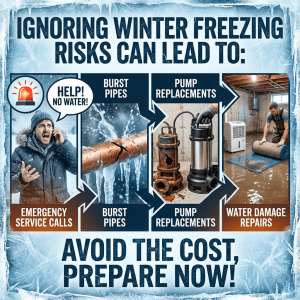 Recognizing early symptoms can prevent permanent damage:
- No water flow
- Intermittent sputtering
- Low water pressure
- Frost on pipes
- Unusual pump cycling
If you notice these issues, avoid repeatedly resetting your breaker. Running a frozen pump can cause serious mechanical damage.
Preventative Steps to Reduce Winter Freezing Risks
Protecting your system doesn’t require major upgrades. It requires awareness and maintenance.
Insulate Exposed Components
Use foam pipe insulation for visible piping in crawl spaces or garages.
Seal Foundation Gaps
Cold air infiltration increases winter freezing risks near entry points.
Verify Proper Burial Depth
Ensure underground lines meet current frost depth recommendations.
Schedule Routine Maintenance
Did you take advantage of our Well Inspection offer? Consider reviewing “Understanding Submersible Well Pumps” to protect your system better.
Monitor Water Quality Changes
Discoloration or pressure changes during cold weather may signal internal issues. If iron buildup is present, freezing can worsen pipe restrictions. Learn more about Iron Levels in Southern Maryland Water and how it impacts system performance.
Why Preparation Brings Peace of Mind
Your well system is your home’s lifeline. For families in Upper Marlboro, Accokeek, LaPlata, and California, reliable access to water during winter is essential.
Taking proactive steps before temperatures drop helps ensure your system operates smoothly all winter long.
Southern Maryland winters may be shorter than those up north, but they are unpredictable. Preparation—not reaction—is the key to avoiding costly disruptions.
If you haven’t had your well evaluated recently, now is the time. A small preventative investment today can save thousands in repairs tomorrow.

Further Reading
The Top Signs You’re Dealing with Frozen Pipes. https://www.rjtilley.com/blog/2025/december/the-top-signs-youre-dealing-with-frozen-pipes/
Grove & Son Well Service & Repair. (n.d.). Water well inspection: Avoid costly repairs. Retrieved from https://groveandsonswellserviceandrepairs.com/water-well-inspection/
Grove & Son Well Service & Repair. (n.d.). Understanding submersible well pumps in Southern Maryland. Retrieved from https://groveandsonswellserviceandrepairs.com/understanding-submersible-well-pumps/
Grove & Son Well Service & Repair. (n.d.). Iron levels in Southern Maryland water: What you need to know. Retrieved from https://groveandsonswellserviceandrepairs.com/iron-levels-in-southern-maryland-water/

0 Comments